English
 Arabic

Everyone’s talking about Queen’s Domain right now, but as someone who tried Queen’s Domain and did not care for it, allow me to direct your attention to an alternative old-school dungeon crawler: Underkeep, which launched on Steam on November 5 and has been absolutely phenomenal through the roughly four hours I’ve put into it so far.
Like Queen’s Domain, Underkeep is firmly rooted in the 1990s, but I’m talkin’ the early ’90s, and even before that: Classic grid-based RPGs like The Bard’s Tale, Dungeon Master, Wizardry, and Eye of the Beholder. In fact, as someone who loves Eye of the Beholder (specifically the second one, The Legend of Darkmoon), I noticed a lot of nearly direct lifts from that series: primarily visual, but also a few audio cues, that I swear I’ve heard before.
But my concerns that Underkeep might be a low-effort knockoff evaporated pretty quickly. After four hours of play I feel like I’ve barely scratched the game’s surface: I still haven’t found the titular village of Underkeep, where I assume the real action will begin, but I’ve crashed (literally, in a few cases) through multiple dungeons, all interconnected horizontally or vertically, and explored an overworld that’s a whole lot bigger than I expected. At the very least, Underkeep looks beefy.
Underkeep’s gameplay preserves the vibe of those old-time RPGs while eliminating most of their more objectionable nonsense. Its shared inventory is divided into categories that make managing and swapping equipment between party members extremely easy, the automapping is detailed while still allowing freehand notes (I know, I know, get some paper and do your own maps, but who has time for that these days?), and tools are used automatically without needing to be equipped.
And unlike so many games in the genre, Underkeep is entirely turn-based. This eliminates the cheese strategy of hitting an enemy and moving a step away before they can hit back, which carried so many gamers through so many fights in so many games over the years. But it also encourages more thoughtfulness: When I see an enemy in the distance, I can take my time to think about what I want to do, move to a more advantageous position, or even just go take a break for a while.
I’m free to do whatever I want until melee combat actually begins. Once that happens, everyone in the party has to finish their turn, and then let the enemies finish theirs, at which point we’re all free to run away (and probably be chased) or launch another round of fighting. I’ll always come down on the real-time-with-pause side of the argument for isometric RPGs, but the turn-based approach is ideal for Underkeep.
Character classes are a fairly standard mix—fighter, paladin, wizard, thief, that sort of thing—but the races are a bit more interesting. Humans and dwarves are on the menu, and “elk” are kind of like elves, but then you get the stoneborn, raven, and slugman, all of them nicely weird. Stoneborn, for instance, are basically golems—extremely strong and tough, but they have the agility of a Mack truck and can’t wear body armor. They’re basically a boulder that can hit you really hard, which is great in some ways but has some real drawbacks too. Ravens, meanwhile, are subject to random mutations that can take them off in unforeseeable directions: My own raven character recently mutated a healing buff called Roommate from the Void: “Something moved into your body at some point and never left. It pays rent in blood.”
Slugmen, well, they’re just slugs who are also men. They look like this:
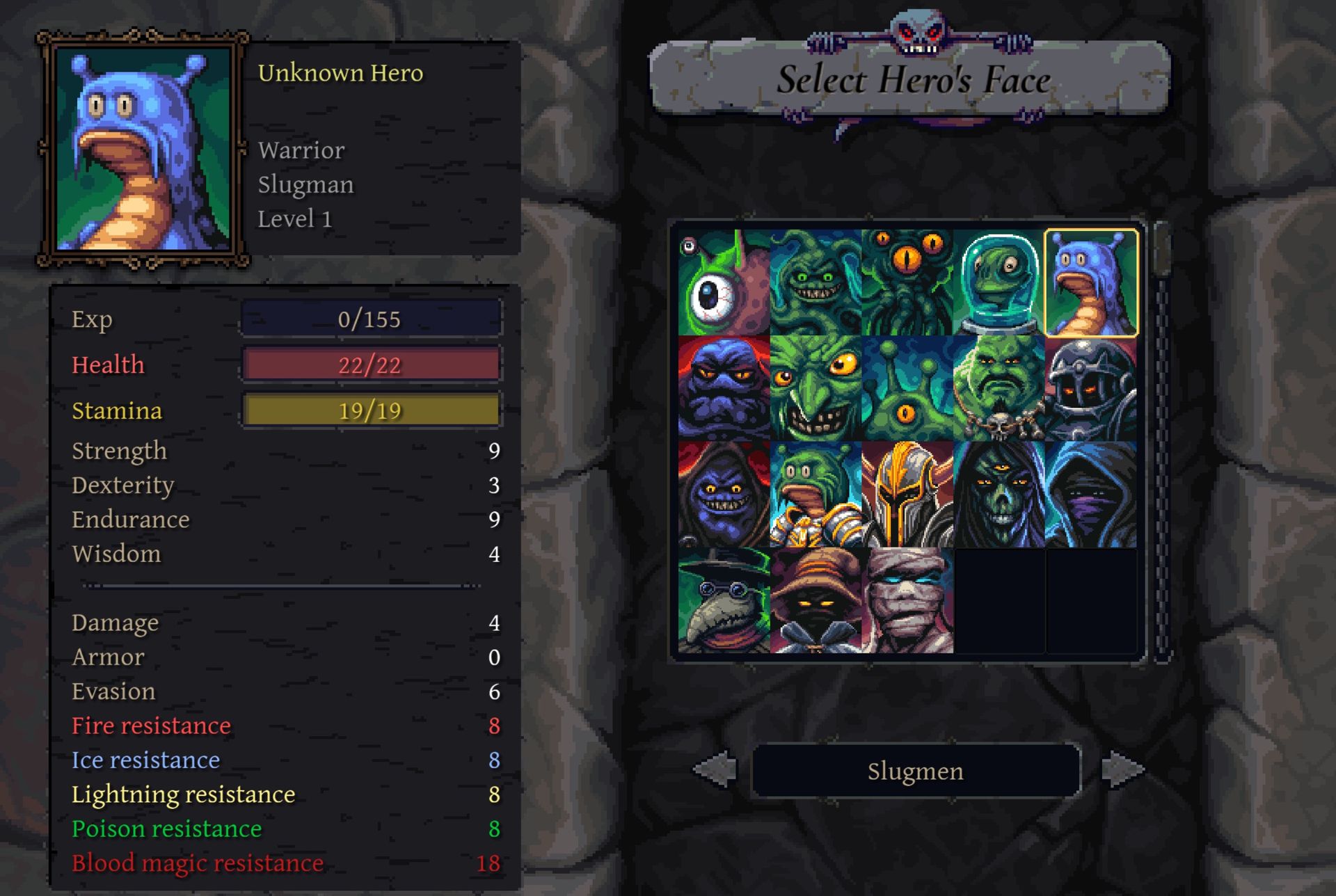
There’s also no limit to combining races and classes: A stoneborn thief or slugman paladin may not be a great idea, but if you want to give it a shot, knock yourself out.
The encounter artwork is also lovely:
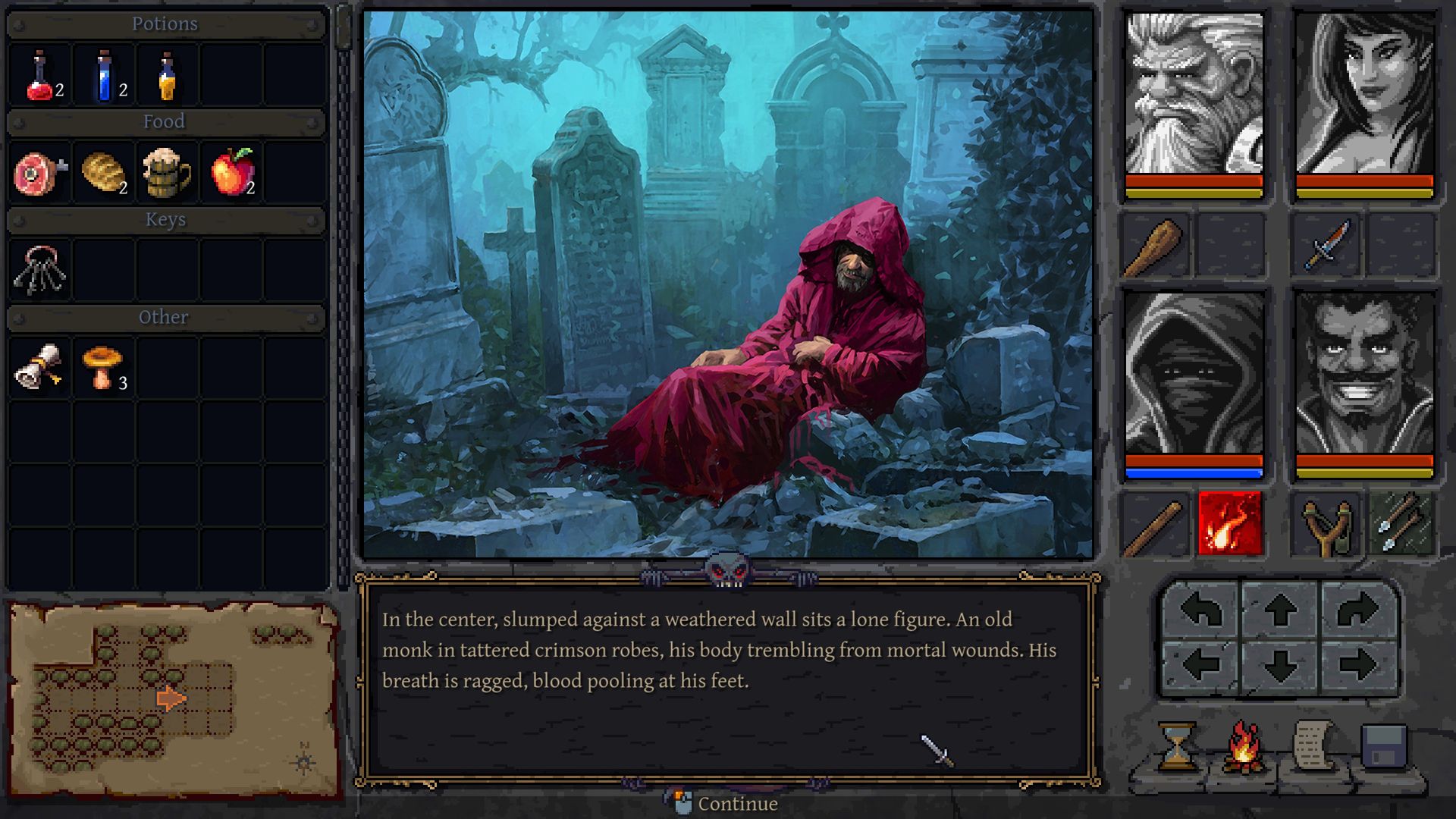
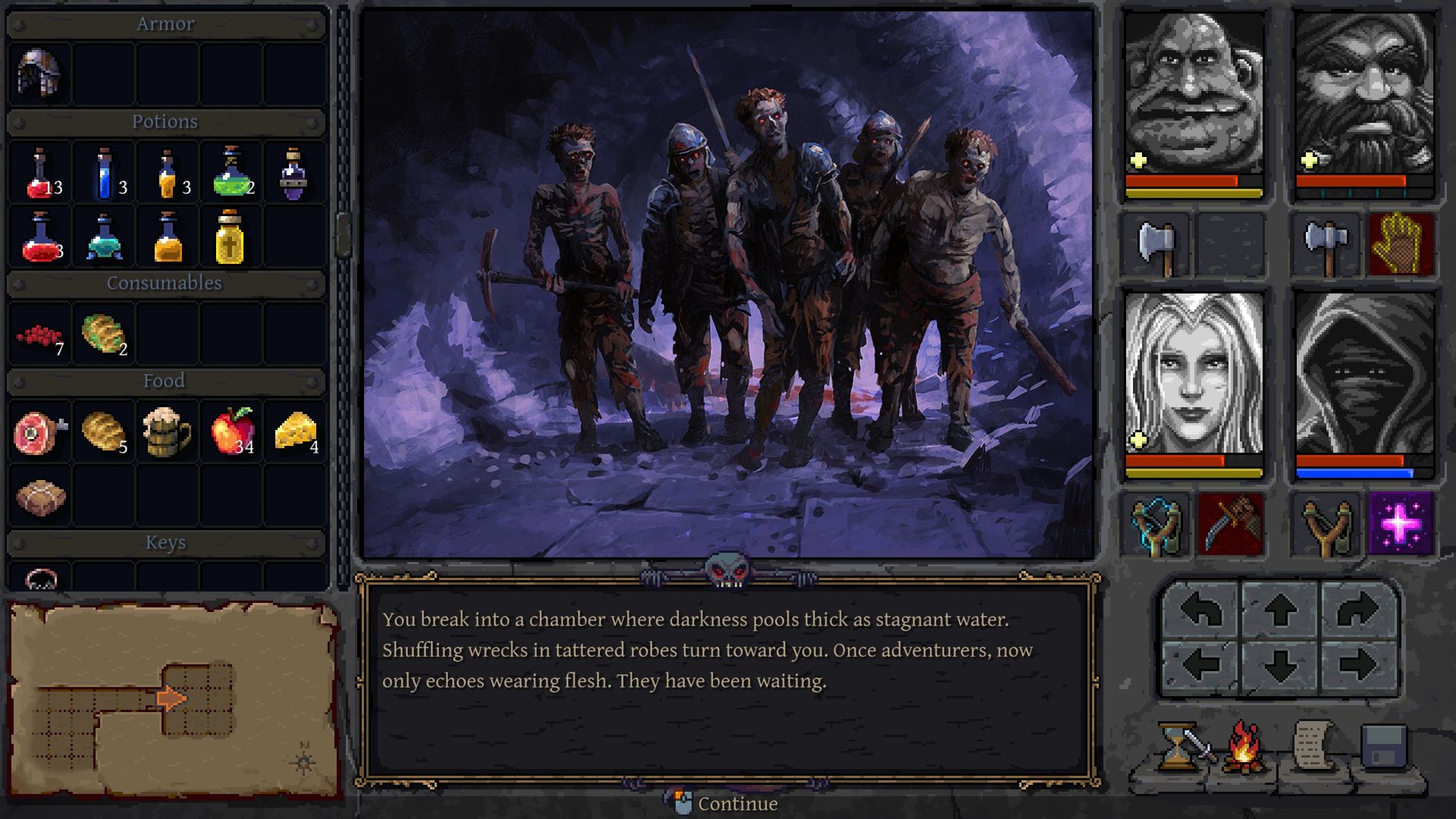
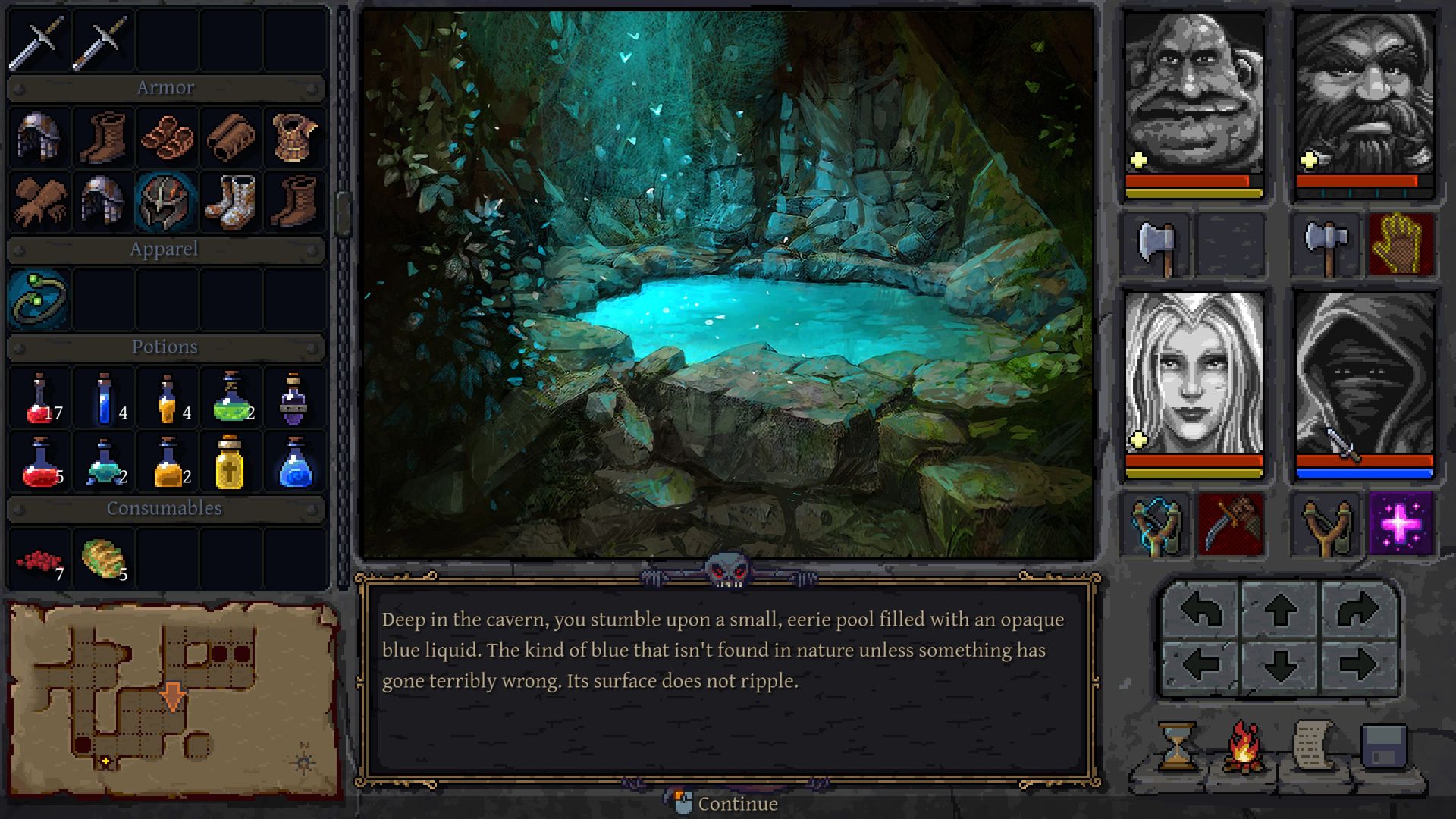
There’s not a lot of reading to do in Underkeep, but the writing for those encounters is pleasingly evocative in an old-school tabletop way, and there are plenty of surprises to be had too. Depending on how you deal with the red-cloaked guy above, for instance, you may get a reward, you might get jumped, or you could find yourself facing some sort of bigger trouble down the road—that’s not confirmed yet, but I definitely got some ‘Be seein’ you’ stinkeye from him before he slunk off into the next life.
It makes me a little sad to say, but one of my first thoughts when I saw Underkeep was whether the assets were made with generative AI. I’m not the only one to have that worry: Multiple arguments about it are underway in the Steam forums right now. Unlike some people in those conversations who say they “can just tell” when AI is present, I cannot—but the Steam store page has no AI disclosure, and developer Rake in Grass has repeatedly insisted that no generative AI was used.
“All artwork in Underkeep was hand-drawn by our artists,” an FAQ states. “Some variations in style are natural, as several artists contributed to the game. The occasional “mixels” are caused by dynamic scaling used to simulate 3D perspective and smooth animations.”
It’s unfortunate that debates like this are so commonplace now, because Underkeep is a joy: I haven’t played a whole huge lot of them in recent years, but this is easily my favorite grid-based RPG since the great Legend of Grimrock 2, which will soon be 15 years old.
Underkeep is out now on Steam for $19.50, a 15% launch discount on the regular price that’s available until November 19. You can also sample the goods by way of the demo, which offers about an hour of highly compressed gameplay and some fun surprises.

2026 games: All the upcoming games
Best PC games: Our all-time favorites
Free PC games: Freebie fest
Best FPS games: Finest gunplay
Best RPGs: Grand adventures
Best co-op games: Better together