English
 Arabic
Where to start? It’s a familiar mantra to those of us who have ridden into the lavish landscapes of Ghost of Yōtei’s Ezo. With a rediscovered home behind, and a world filled with revenge, myths and secrets ahead, it’s proven a wonderful dilemma to have. And every corner explored, each tale told, and duel won leading to further questions, one of which kept recurring throughout: how did this all come together? To answer, we reached out to ask two people who can speak to Ezo’s secrets best: the game’s creative directors Jason Connell and Nate Fox.
Sitting down with them, and a whole game to unpack, came the now-familiar refrain: where to start? The answer to that: begin at the end.
A word of warning then: this interview strays deep into spoiler territory. First, mark every member of the Yotei Six off your list, and discover every hidden corner of Ezo. The following chat charts game design choices, key side missions, the game’s conclusion and more.
Spoilers below
Note: This version of the interview is condensed for clarity and brevity. The full conversation will be available on PlayStation Podcast later today.

PlayStation Blog: The game’s final duel is a battle with Lord Saito. It really feels like it’s all been leading up to this moment, not just for Atsu, but also the player and that Saito throws practically every challenge you’ve learned to face at you in one single duel. Can you tell us a bit about how you approach the mechanics of this fight?
Jason Connell: We wanted the ending to be an emotional moment, one that brought together all of her journey of overcoming trauma. And it’s both about kind of figuring out that there’s something better to live for, but also to kind of celebrate the ways that the player has, through their efforts, kind of improved Atsu, made her more capable. And in Ghost of Yotei, that’s about mastering weapons, becoming more confident, more capable. And so, Saito himself will attack you with every weapon that you will need to counter with weapons that you’ve learned throughout your journey. This is a chance to celebrate your mastery and understand how to counter and deal with that. Ultimately, in the final battle, where it’s Katana versus Katana, it’s bringing it back down to that simple sword that your father forged in celebration of his two children, and that’s the weapon that you finished the battle with.

The Storm Blade story. It’s a fascinating one in so much that it reveals the fate of Jin Sakai. Can you tell us about how you approach the creation of this mission? Is there any concern about talking about the protagonist of the previous title in Ghost of Yotei, or confirming a relatively sad end to such a beloved character?
Nate Fox: I would say about a year or two into production, we had some ideas of where that might be and how we might be able to honor that character. We always knew it was going to happen. But then when we started placing it in the world, we just found this wonderful spot that really felt like it could be his spot, you know, and we could celebrate all aspects, whether it’s the tree or the Pampas grass or the or the Suzuki grass or the blade. Things you identify with his story and his legacy, and make it like a shrine / mission for him.
We wanted it to be in the right spot in the game. Like if you come out right out the gate, and it’s right there on your right, that doesn’t seem right. That doesn’t seem like it’s fitting. But putting it in the appropriate time space where you’ve sat with this game well enough, and you understand what this game is, and when you find it, it’s a gem, especially if you were a fan of the previous game. And getting the timing right was it was a big part of that too.

Was the intent always to make Takezo The Unrivaled the hardest encounter in the game. Or would you designate that as the hardest encounter in the game? I’m curious to know if the studio defeated him on Lethal difficulty, and how quickly you defeated him on that setting.
Jason Connell: Takezo was not in anyone’s plans at the beginning of the game. It was a great idea, put forward by one of the folks who makes missions, that we would keep to Takezo as a sort of ultimate battle after you’d finished the Atsu’s journey. And I couldn’t be happier that it represents this, you know, the hardest challenge in the entire game. In the most epic location. Our combat team set it to what many of us thought was impossible, until I saw one of the gameplay coders effortlessly beat it without all the upgrades. He said that he got it on his fourth try. Now, these people have been playing the game, programming the combat, for years! So that’s what you’re up against, if you’re having a hard time and you think this is impossible. The way to get better is just to simply make the game for many years and work in the combat team, and then suddenly it will all be easier.

So past the intro encounter with The Snake, the game’s designed to let you choose which of the Yōtei Six to hunt and in what order. This can shape your play style, such as The Kitsune path expanding your stealth options, or bring a deeper connection with the world, like the Oni’s, leading you to encounter Jubei. How do you design the game to accommodate those different play styles that result?
Jason Connell: Well, when we set out to make this game, when it was just Nate and I, you know, dreaming up what it would be, something we talked about was just really leaning into what we saw fans really love about playing in the open world, having the freedom to kind of sort of do what they want to do.
So from the very beginning, we were like, okay, let’s go real hard at this. Let’s invest in design and tech that allows us to give a little bit more freedom, even from the beginning. And so that has wrinkles, you know, it can get challenging to tell a really solid story that needs a beginning, middle and end. So some of our first stabs at this were way too open, right? Like, you can just go after any of the Six. And in that process, Nate pointed out, like, how hard that might be to have that beginning, middle and end, and we need that, because that’s Atsu’s story: that’s the structure.
Really early on, you definitely get this kind of choice. It’s not just a narrative choice. We added weight to that, by giving it a mechanical sort of choice. If you like role playing, if you like being a stealth- like character, or you like playing games that have ninja-like abilities, then you know, this area up here might be more for you. Or maybe you’re intrigued by this over here, which has got more of a traditional big castle and some cool fire weapons and a spear, and we kind of hint you with a little bit of it. So if it’s not just the story that motivates you, or that you’re intrigued by that narrative seed that we’re giving you, maybe it’ll be sort of the mechanics, and we’re giving you a number of ways you might be able to be influenced to make an informed decision.

Briefly talking about weapons, the Sensei quests clearly indicate which weapons they’ll unlock from the start, but the conditions to unlock the rifle and gun in comparison isn’t as obvious. Why was that?
Jason Connell: Well, we knew that the hand to hand weapons were a great source of pleasure for players. They loved getting them. They loved mastering them, and it adds a lot of diversity to your experience of fighting enemies. And that combat, the lethal precision inside of the game, is something that is sort of dead center of the experience.
So we wanted to make sure players knew that they were out there and make it pretty easy to find them, because they’re such a driver of joy in the game. Range weapons are not as core. So the firearms, we didn’t want to make them totally apparent where to go, so that you would have some of the pleasure of discovering them for yourself, whereas the melee weapons we knew were just too important to let anyone miss out on. They are optional, so you could miss out on them, but we didn’t want just sort of missing their presence to be the issue. We wanted to be a choice on the player’s part to say, I don’t want to bother with that.

There are some wonderful smaller encounters in the game, such as the guy who disappears – poorly, I will say – in a haze of smoke bombs… or the fight with a ronin that, I think he’s labeled as “Irritating Ronin”, that elicits an angry response from Atsu once she’s defeated him. Can you touch upon how these came about?
Nate Fox: Just really early on we had people that would work on the main story, then we have people fleshing out the world. Some of those smaller bits just come from, “hey, how would people operate in this place?” How can we give this place a little bit of personality that you might be intrigued and interested to hear about these people. They’re just flavors in the world. Which, you know, honestly, we didn’t have a ton of time to do in the last game. So it was nice to be able to sort of try some of those unique flavors early on. That smoke bomb guy might have been one of the very first ones that we created in the game. We went through a bunch of iteration to make him who he is, but that might have been the first six months of the project. And I’m happy to see some of those make it through to the end, because there’s plenty that do not [laughs].


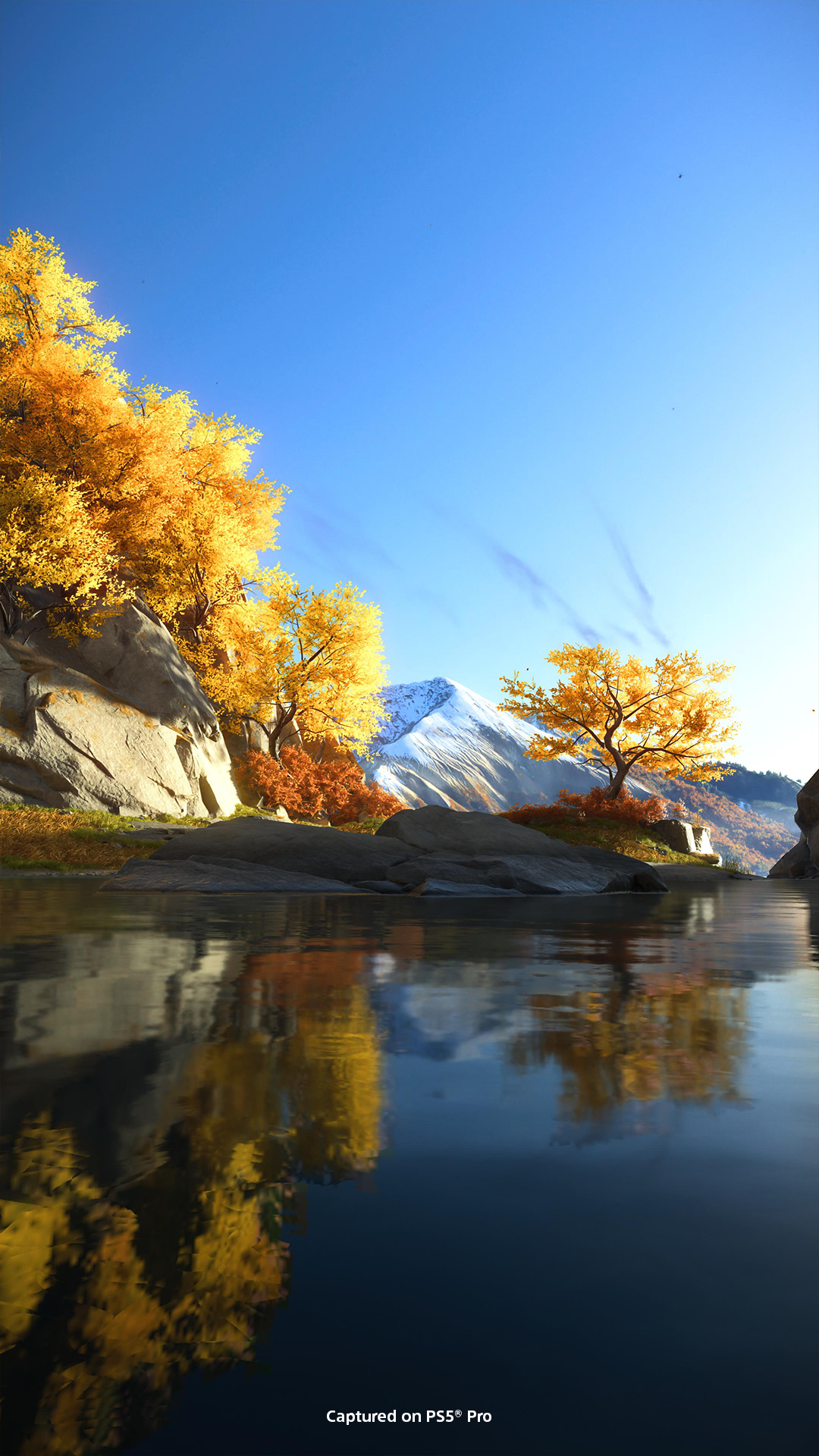
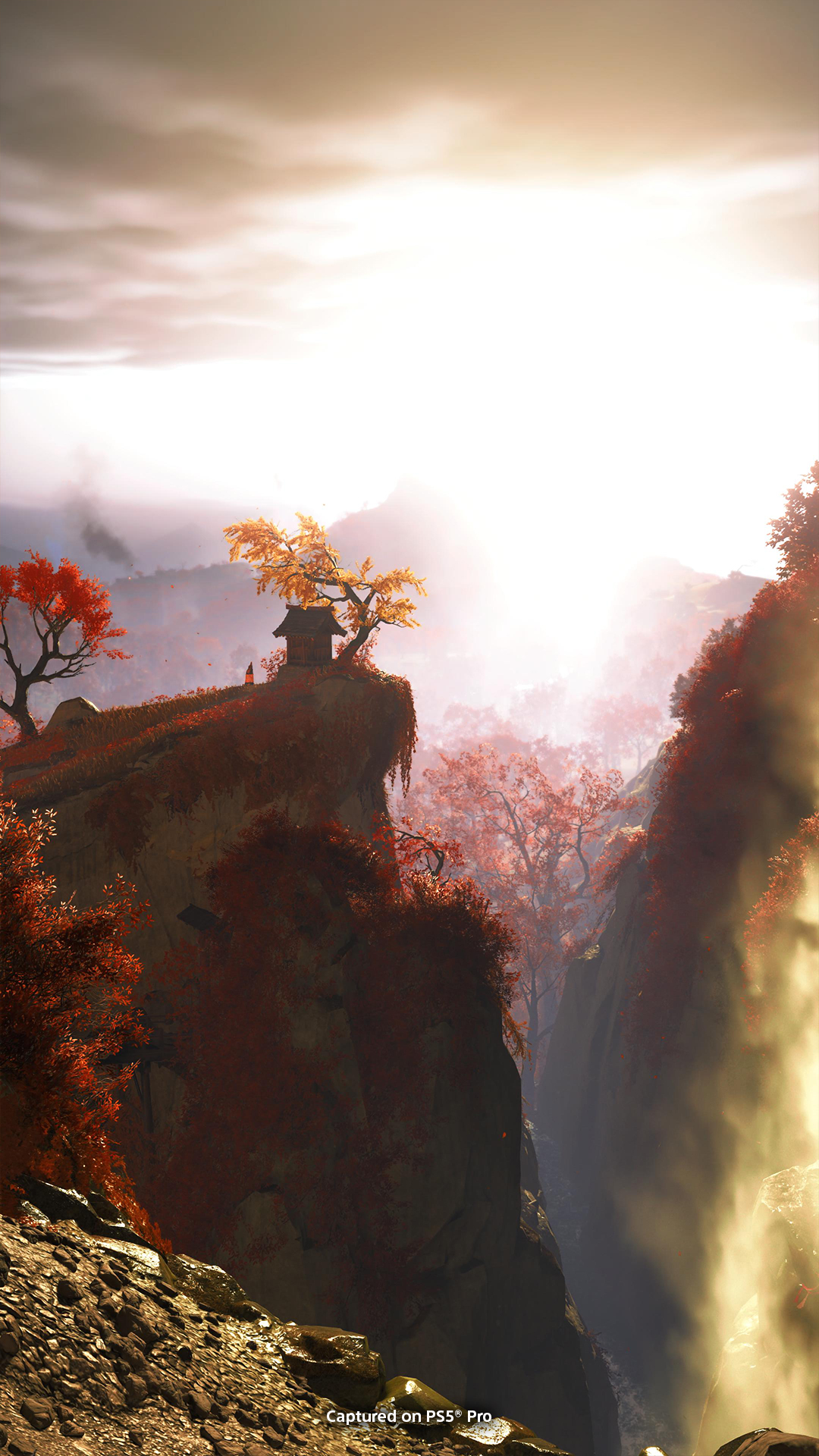
It is a beautiful world. There are numerous moments in which, say, a cliff climb or turning the road leads to a picturesque scene that is worth photographing. How intensive was it to get those moments to hit the sweet spot? Did it mean the immediate environment, how to be continually reshaped, to have the camera angles hit just right?
Nate Fox: One of the challenges of making an open world that’s as big as this and also trying to make a game that is artistically powerful and potent, that people step in the world and they feel the weight of the art… That is super hard to do.
The fact that we cannot control what you’re looking at makes it tremendously harder, right? Like, we have no idea where you’re looking. We have no idea what you’re doing. We have a clock that kind of moves when you’re in the open world. So we don’t know if you’re in day or night. Certainly, in some cases, we’ve specifically put you in areas where special times of day exist, like the Spider Lily mission.
But it is such a testament to the environment art team to be able to construct an environment with such beauty that no matter if I look that way, or that way, whether it’s daytime or it’s night time, shockingly, looks pretty good. That is very hard to do. Open World visual design: incredibly hard. Now they definitely know that you’re going to be coming up over this ledge during a Shrine climb. You’re going to be coming up over this ledge, and they might position those rocks to be, and that shrine, to look to the point where you know you’re going to be looking generally in this direction. They’ll definitely do that. And they do a wonderful job constructing what they think that you’ll do. But because we don’t know, we have to get a couple things right. We have to get the atmosphere right. We have to get lighting right. We have to get color. The pacing of the visual noise, and how much noise you have on the screen. All these things are just constructed in the open world DNA of the visual design. And we hope that we can guide you to areas where it just kind of puts a magnifying glass on that and makes it, you know, really pop in those moments. A very few amount of people on the team really get to contribute exactly to this, and I think they do a wonderful job bringing it to life.

If you want more Ghost of Yōtei, New Game Plus is available as a game update, while cooperative multiplayer DLC Ghost of Yōtei Legends launches in 2026.